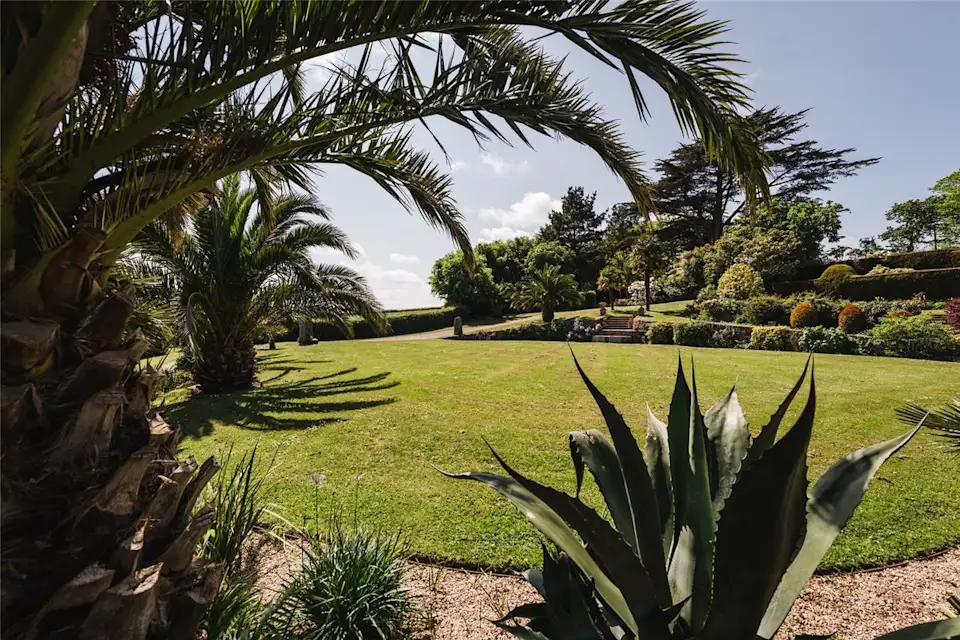
Great gardens are acts of balance.
Across prime properties in the UK, landscape design is moving away from rigid formality and towards a more fluid dialogue between architecture and nature. The result is a new generation of landscapes that feel both intentional and organic, designed, but never overworked.
Formal gardens still have their place. Structured terraces, parterres and axial views provide clarity and a sense of arrival, particularly around historic homes. But these elements increasingly give way to softer planting, meadows and woodland edges that blur into the surrounding environment.
This layered approach creates richness. A garden unfolds gradually, offering moments of order and moments of surprise. Paths curve rather than dictate. Planting evolves with the seasons, bringing colour, texture and movement throughout the year.
Ecology plays a growing role in landscape decisions. Meadows support biodiversity, trees provide natural shade and shelter, and planting schemes are designed to thrive rather than simply survive. Sustainability is embedded quietly, enhancing the beauty of the landscape rather than defining it.
For international buyers, these landscapes offer a uniquely British sensibility, one that values stewardship as much as aesthetics. Land is not simply owned, but cared for, shaped with an understanding of its long-term future.
The most successful gardens do not attempt to dominate nature. They collaborate with it, creating landscapes that feel timeless, generous and deeply rooted in place.
